

Global medical technology companies are deepening their focus on orthopedic implants and joint replacement procedures as core long-term revenue engines, betting that demographic trends and rising prevalence of osteoarthritis will sustain procedural volumes across developed and emerging markets for decades to come.
Smith & Nephew plc, Stryker Corp., and Zimmer Biomet, three of the world’s largest orthopedic device makers, have each outlined strategies centered on hip and knee replacements, trauma fixation, and minimally invasive sports medicine products. Their shared emphasis on these segments reflects a calculation that aging populations, longer life expectancy, and increasing access to surgical care in Asia and other growth regions will create steady demand even through economic cycles.
Smith & Nephew plc operates in orthopedics, sports medicine, and advanced wound management, with reconstructive implants representing a foundational business line. The company designs and manufactures joint replacement systems for hips, knees, and shoulders, competing in procedures that address degenerative joint diseases affecting millions globally.
Stryker Corp. has positioned orthopedics as a “core growth engine,” spanning hip and knee implants, trauma and extremities hardware, and increasingly sophisticated robotics-assisted surgery systems. The company benefits from demographic trends such as aging populations, which translate into rising volumes of joint replacement procedures over time. Stryker has also invested in computer navigation and robotic technologies designed to help surgeons align implants more accurately, potentially reducing variability in outcomes and offering hospitals a way to differentiate their surgical capabilities.
Zimmer Biomet specializes in musculoskeletal health solutions with a core focus on orthopedic implants, surgical tools, and connected care services. The company generates revenue across hospitals and clinics worldwide through hip and knee arthroplasty, as well as shoulder, extremity, trauma, and spine-related technologies. Like its competitors, Zimmer Biomet aims to benefit from structural trends such as longer life expectancy and rising prevalence of osteoarthritis by offering products that restore mobility and improve quality of life.
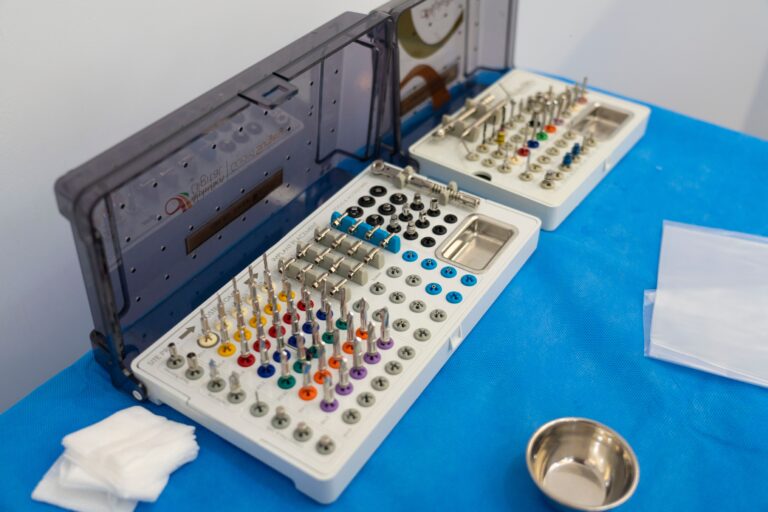
Beyond the implants themselves, each company benefits from recurring revenue tied to single-use instruments, surgical trays, and disposable items consumed in each procedure. Once a hospital or surgical center commits to a particular implant platform and trains its surgical staff, switching costs and workflow inertia create incentives to continue using the same system. This dynamic generates ongoing sales of related products and helps sustain margins even as implant pricing faces competitive pressure.
Stryker has emphasized this advantage explicitly, noting that established implant platforms at hospitals can create “durable relationships with facilities and generate ongoing sales of related products, such as surgical tools, trays and single-use items.” Smith & Nephew and Zimmer Biomet have built similar supply relationships into their operational strategies, with support services and instrument compatibility designed to deepen integration into hospital workflows.
Investment in robotics-assisted surgery and computer-guided navigation systems represents a competitive frontier within orthopedics. Stryker has positioned these technologies as tools that can help surgeons align implants more accurately and reduce procedure variability, appealing to hospitals that seek to improve outcomes and operational efficiency in the operating room.
Zimmer Biomet similarly emphasizes innovation in implant design, biomaterials, and surgical workflows, including improvements to implant longevity, enhancements to fixation mechanisms, and tools that help surgeons plan and execute procedures with greater precision. These advanced systems can justify higher capital spending budgets for hospitals, especially as patient expectations for outcome certainty rise and payers increasingly scrutinize cost-per-quality-adjusted-life-year metrics.
All three companies have built significant portfolios in Sports medicine, offering instruments, fixation devices, and other products for minimally invasive repair of ligaments, tendons, and soft tissues. Smith & Nephew describes this segment as “important,” targeting recovery time reduction and joint function restoration particularly relevant for working-age patients and athletes.
Trauma fixation and extremity products add another revenue stream, addressing fractures and complex injuries. Zimmer Biomet’s trauma portfolio, combined with its Sports medicine and spine offerings, enables the company to serve multiple areas of musculoskeletal care and reduce dependency on any single procedure or indication. This diversification also provides insulation from regional variations in procedure volumes and reimbursement policies.
As healthcare systems worldwide face budget pressure, all three companies emphasize the role of clinical evidence and economic analysis in demonstrating product value. Smith & Nephew explicitly states its aim to support better patient outcomes while providing tools that fit into modern hospital workflows and reimbursement structures. The company seeks to demonstrate value through clinical data, long-term outcome studies, and economic analyses that highlight potential savings from reduced complications or shorter hospital stays.
This shift toward value-based evidence reflects a broader healthcare industry trend in which device makers must justify premium pricing not just through technical superiority but through rigorous health economic data showing improved patient outcomes or reduced total cost of care. Companies that can produce credible long-term outcome registries and real-world performance data may gain competitive advantage in tender processes and reimbursement negotiations.
The strategic alignment across these three major players signals confidence in the orthopedic device market’s structural resilience. Demographic trends, rising surgical volumes in emerging markets, and technological advances in precision surgery create a multidecade growth runway. However, competition, pricing pressures, and regulatory scrutiny remain relevant considerations. The companies’ emphasis on clinical evidence, surgical innovation, and integrated hospital relationships suggests that competitive advantage will accrue to those that can combine high-quality implants with advanced surgical enabling technologies and strong post-market support.
The next phase of differentiation may hinge on data integration and digital health capabilities, as hospitals seek to track long-term implant performance, surgeon outcomes, and patient recovery trajectories in centralized digital ecosystems. Companies that can embed their products into broader hospital information systems and outcome tracking platforms may achieve stickier customer relationships and better positioning for value-based reimbursement models.